(24/7) support +977-9851232668, +977-9801068400, +977-1-4964222

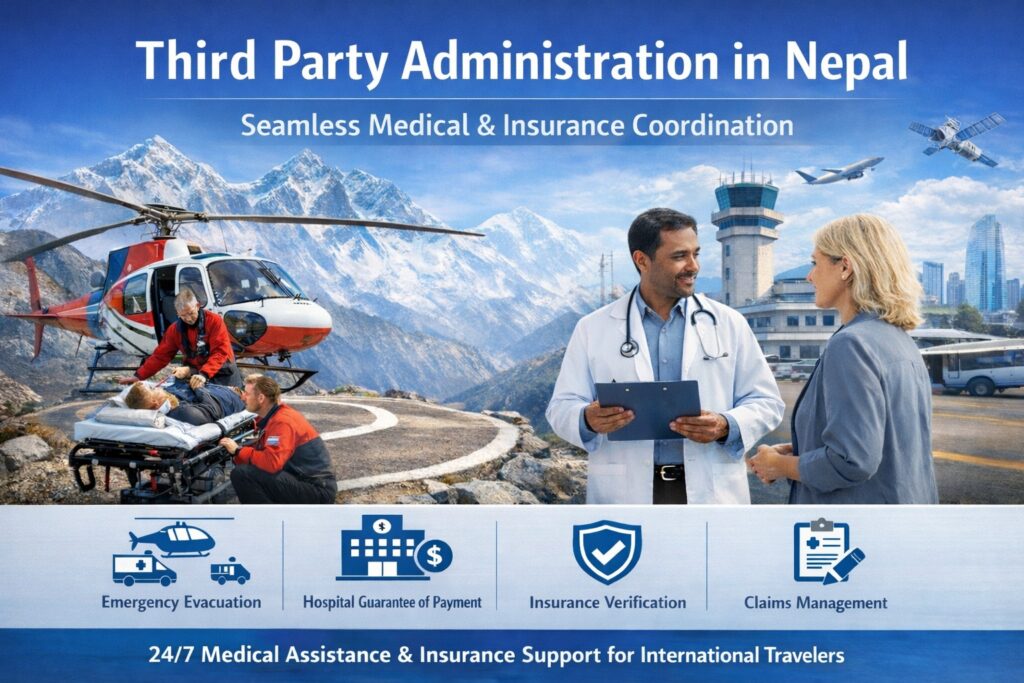
Nepal is one of the world’s premier destinations for trekking, mountaineering, cultural tourism, and adventure travel. Each year, travelers from across the world come to Nepal to experience the Himalayas, including the Everest and Annapurna regions. While most journeys are safe and successful, the country’s remote geography and high-altitude terrain can present medical challenges that require fast, structured coordination.
In emergencies, access to healthcare in Nepal often involves multiple steps: local clinics, helicopter evacuation, hospital admission in Kathmandu, and international insurance approval. At the same time, travel insurance policies vary widely in coverage, limits, and authorization requirements. This is where Third Party Administration in Nepal becomes essential.
Professional TPA services in Nepal ensure that patients, hospitals, and insurers are connected through clear communication, financial guarantees, and structured case management. The goal is simple: deliver timely medical care while protecting financial and administrative transparency for all parties involved.
What Is Third Party Administration (TPA)?
Third Party Administration (TPA) refers to a specialized service that manages medical and insurance coordination on behalf of insurers and assistance companies. A TPA acts as a bridge between:
- The patient (traveler or expatriate)
- The hospital or healthcare provider
- The travel insurance company
- The global assistance provider
In Nepal, local expertise is critical. Healthcare infrastructure varies between urban centers and remote mountain regions. International insurers may not be familiar with local hospital standards, evacuation logistics, or regulatory procedures. A professional provider such as Alpine Rescue Service ensures that every medical case is managed in compliance with Nepalese regulations and international insurance protocols.
In simple terms, TPA services in Nepal ensure that medical care is delivered efficiently, payments are authorized properly, and documentation meets international standards.
Why TPA Services Are Essential in Nepal
Nepal’s unique geography makes medical assistance coordination more complex than in many countries. Trekking routes in the Everest region, Annapurna region, and Manaslu region are often several days from road access. When a traveler experiences altitude sickness, injury, or sudden illness, helicopter evacuation may be required.
Key challenges include:
- Remote access and unpredictable weather
- Limited local clinic capabilities
- Language barriers between patients and providers
- Insurance policy verification delays
- Hospitals requiring financial guarantees before treatment
Without structured medical assistance coordination in Nepal, treatment delays can occur. A TPA ensures that coverage is verified quickly and that a hospital guarantee of payment is issued when appropriate. This protects both the patient and the healthcare facility.
Step-by-Step Medical Case Management Process
Professional Third Party Administration in Nepal follows a structured process to ensure clarity and efficiency.
1. 24/7 Emergency Call/Email Intake
Cases begin with a hotline notification from:
- The patient or travel companion
- A trekking guide
- A hospital or clinic
- An insurance assistance center
A response team immediately opens a case file.
2. Medical Assessment and Triage
A medical coordinator reviews:
- Symptoms and clinical status
- Location and accessibility
- Urgency level
- Evacuation necessity
This assessment determines whether ground transport, helicopter evacuation, or direct hospital admission is required.
3. Hospital Referral or Evacuation Coordination
If evacuation is required, coordination includes:
- Helicopter dispatch (weather permitting)
- Ground ambulance arrangements
- Hospital bed confirmation
Urban referrals may involve private hospitals with international standards.
4. Insurance Policy Verification
Simultaneously, the TPA verifies:
- Policy validity
- Coverage limits
- Deductibles or exclusions
- Pre-authorization requirements
Fast verification is critical to avoid treatment delays.
5. Guarantee of Payment (GOP) Issuance
When coverage is confirmed, a formal hospital guarantee of payment is issued. This assures the hospital that approved medical costs will be paid by the TPA.
In many cases, this allows the traveler to avoid large upfront payments.
6. Ongoing Medical Monitoring
During hospitalization, case managers:
- Monitor treatment plans
- Communicate with attending physicians
- Provide updates to insurers and families
- Review cost estimates
This ensures transparency and clinical appropriateness.
7. Claims Documentation and Reporting
After discharge or repatriation, the TPA compiles:
- Medical reports
- Itemized invoices
- Evacuation details
- Clinical summaries
This structured insurance claim support process accelerates reimbursement and auditing.
Typical response timelines:
- Emergency intake response: Immediate
- Insurance verification: Often within hours
- GOP issuance: Same day when documentation is complete
Services Offered by Alpine Rescue as a TPA in Nepal
As a professional provider of Third-Party Administration in Nepal, Alpine Rescue Service offers comprehensive support designed for international standards.
Core services include:
- 24/7 operations center in Kathmandu
- Nationwide hospital and clinic network
- Helicopter and air ambulance coordination
- Multilingual communication (English and regional languages)
- Direct billing arrangements
- Transparent claims management
- Real-time updates to insurers
- On-the-ground logistics in remote trekking regions
Our experience in emergency medical assistance ensures smooth coordination from mountain rescue to hospital discharge.
Benefits for Insurance Companies & Assistance Providers
Global insurers and assistance companies require reliable local partners. A structured TPA provides:
- Reduced financial risk through cost verification
- Transparent billing and documentation
- Accurate clinical reporting
- Regulatory compliance with Nepalese authorities
- Faster claims processing
- A single point of contact in Nepal
Professional TPA services in Nepal also support fraud prevention and cost containment by carefully reviewing treatment plans and vendor charges.
For insurers, partnership with an experienced local coordinator improves both financial governance and client satisfaction.
Benefits for International Travelers
For travelers, Third Party Administration in Nepal offers reassurance during stressful situations.
Key advantages include:
- Avoiding large upfront hospital deposits (when covered)
- Structured case management
- Clear communication with family abroad
- Professional medical advocacy
- Organized evacuation logistics
In unfamiliar environments, having a trusted local coordinator reduces uncertainty and improves outcomes.
Cost Transparency & Financial Coordination
Healthcare costs in Nepal vary depending on:
- Hospital type (public vs private)
- Level of care (ward vs ICU)
- Helicopter evacuation requirements
- Length of stay
Professional TPAs emphasize cost transparency. Before issuing a guarantee of payment, treatment estimates are reviewed and approved by insurers where required.
There are generally two billing models:
- Direct Billing: The insurer pays the hospital through TPA after GOP issuance.
- Reimbursement: The traveler pays upfront and submits documentation later.
Pre-authorization is highly recommended for major procedures or evacuations. Structured oversight also reduces unnecessary procedures and ensures financial integrity.
Frequently Asked Questions (FAQ)
What does a Third-Party Administrator (TPA) do in Nepal?
A TPA coordinates medical care, verifies insurance coverage, issues payment guarantees, manages claims documentation, and communicates between hospitals and insurers.
Do I need to pay upfront for hospital treatment?
If coverage is verified and a guarantee of payment is issued, upfront payment may not be required. Without verification, hospitals may request deposits.
How quickly can a guarantee of payment be issued?
In most cases, once insurance verification is complete and documents are provided, a GOP can be issued the same day.
Does travel insurance always cover helicopter evacuation?
Not always. Coverage depends on policy terms, altitude limits, and medical necessity criteria. Travelers should verify this before arrival.
How can insurers partner with a TPA in Nepal?
Insurers and global assistance providers can establish direct agreements with a licensed local coordinator such as Alpine Rescue Service for structured case management and reporting.
Preparedness and Professional Partnership
Travel to Nepal offers extraordinary experiences. Preparation ensures those experiences remain positive even in unexpected situations.
Travelers should:
- Verify medical and evacuation coverage before departure
- Understand altitude limitations in their insurance policy
- Carry policy details during trekking
Insurance providers and assistance companies should ensure they have reliable local representation for medical assistance coordination.
Professional Third-Party Administration in Nepal ensures that medical cases are handled with efficiency, transparency, and compassion. From emergency evacuation to hospital discharge and claims reporting, structured coordination protects both patients and insurers.