(24/7) support +977-9851232668, +977-9801068400, +977-1-4964222
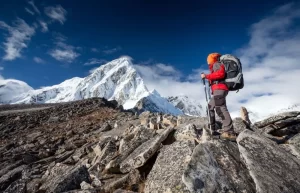

Nepal’s mountains are magnificent. They are also unforgiving.
In just eight months of 2025, 13 trekkers lost their lives in the Khumbu region alone. According to the Solukhumbu District Police, the primary causes were altitude sickness, cardiac complications, and severe weather. And those are only the documented deaths in one district.
In 2024, a total of 1.14 million tourists visited Nepal, with 166,394 embarking on trekking journeys across the country. Each one of those trekkers faced a question that too few ask before they lace up their boots: what happens if something goes wrong above 4,000 metres, where the nearest road is two days away?
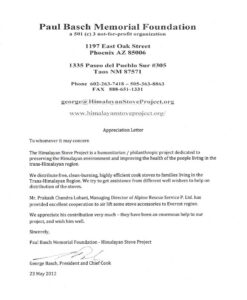
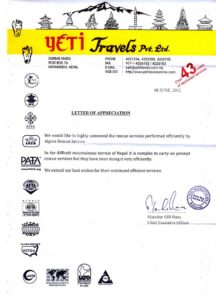
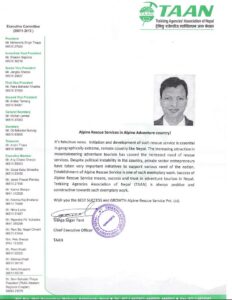
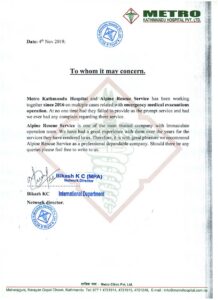
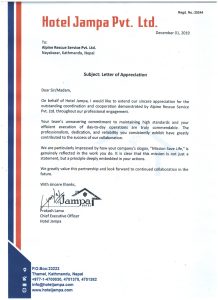
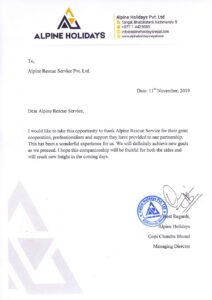
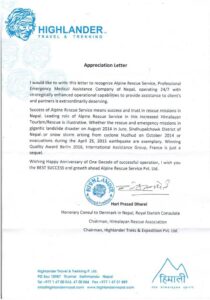
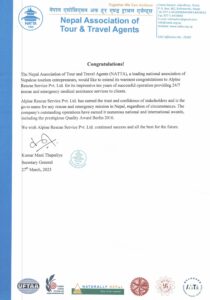
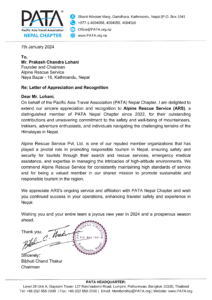
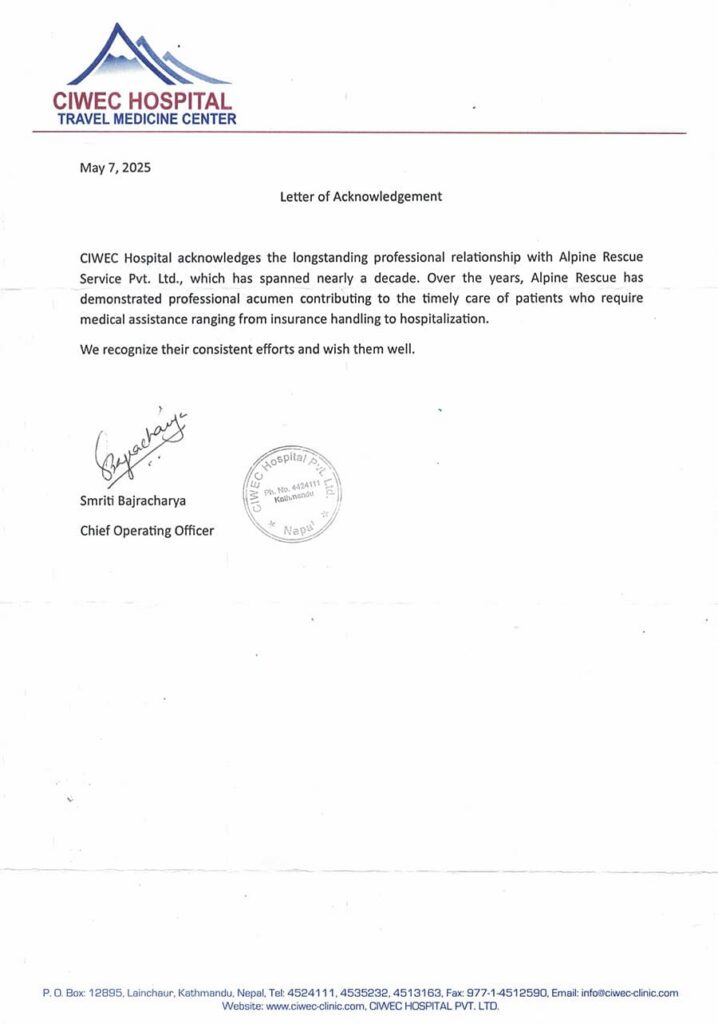
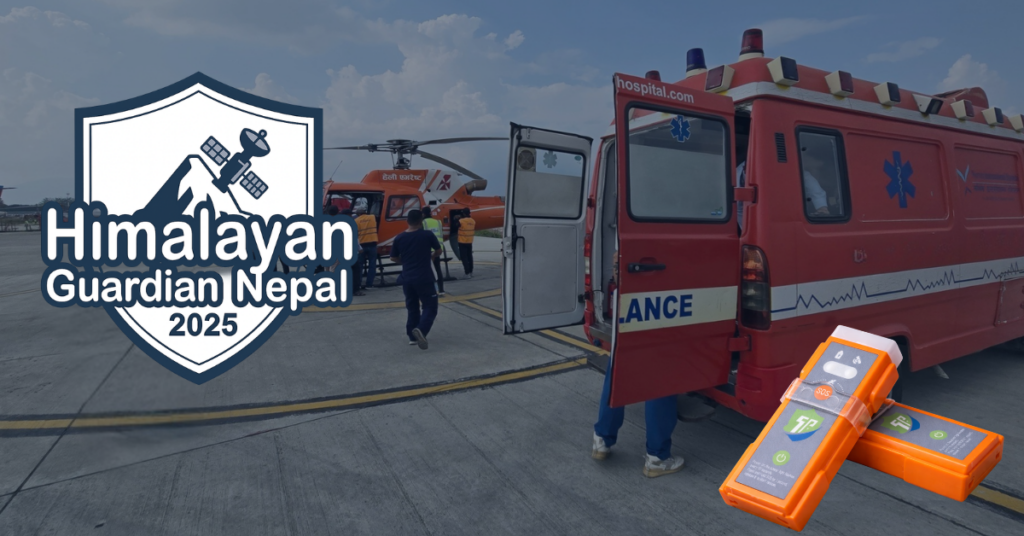
Himalayan Guardian Nepal (HGN) was built to answer that question — with GPS technology, government- approved Nepal trekking insurance for altitudes up to and above 6,000m on designated special routes., and a direct operational partnership with Alpine Rescue, Nepal’s certified heli evacuation service.
| → Get Himalayan Guardian Nepal trekking insurance now: himalayanguardian.com |
Why Trekking Insurance Nepal Fails Without HGN GPS Tracking
Most trekkers believe their travel insurance covers a Nepal mountain rescue. Most are wrong.
Standard travel insurance reimburses. It does not coordinate. It does not track. And it does not dispatch helicopters. When a trekker collapses above Thorong La Pass at 5,416m, the gap between “covered by insurance” and “rescued in time” can be fatal.
The science is stark. Research on Annapurna Circuit trekkers found AMS prevalence of up to 43% on routes reaching 5,400m. Among altitude illness patients evacuated to Kathmandu between 1999 and 2006, High Altitude Pulmonary Edema (HAPE) accounted for 34% of cases, High Altitude Cerebral Edema (HACE) for 21%, and combined HAPE and HACE for 27%. These are not rare events. They are predictable medical emergencies on routes that hundreds of thousands of trekkers walk every year.
Himalayan Guardian Nepal closes the gap with hardware, not paperwork:
- An HGN GPS device transmitting live location via satellite
- AMS tracker alerts sent automatically to HGN’s 24/7 operations centre
- Satellite SOS Nepal capability — fully functional without mobile signal
- Insurance coverage validated up to and above 6,000m, including Everest Base Camp insurance and the Annapurna Circuit
When your HGN device triggers an alert, your coordinates go directly to Alpine Rescue Nepal dispatch. No middleman. No delay.
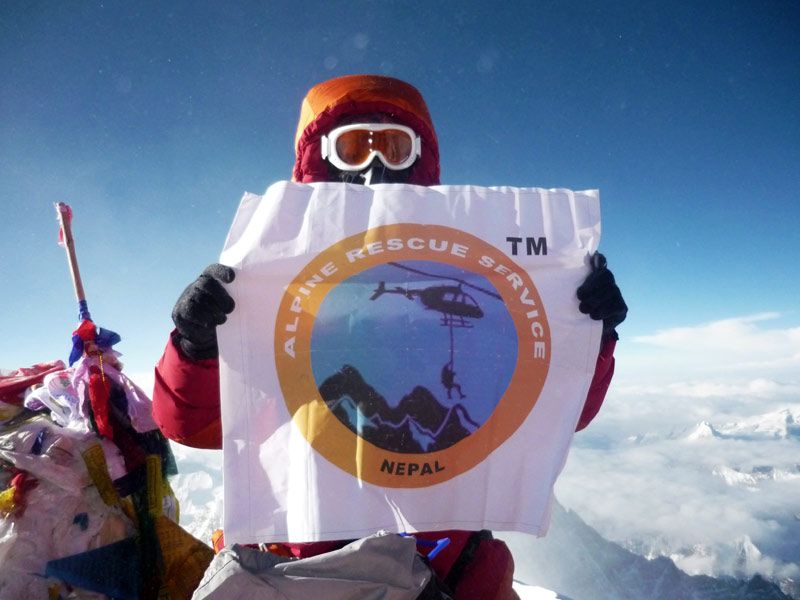
How Alpine Rescue Nepal and HGN Deliver 30-Minute Heli Evacs
Nepal’s government itself acknowledges the problem: obtaining helicopter permits in restricted trekking zones can take two to three days, fatally delaying rescues. The Nepal Mountaineering Association has stated that the government lacks sufficient trained personnel and dedicated rescue teams for the Himalayas.
Himalayan Guardian Nepal bypasses this by operating within an established, pre-approved framework with Alpine Rescue. The rescue chain works like this:
- Trekker activates SOS on HGN GPS device
- Live coordinates reach Alpine Rescue Nepal dispatch within 60 seconds
- Helicopter dispatch confirmed within 10 minutes of alert
- Average Annapurna heli rescue response time: 30 minutes
No other Nepal mountain rescue provider routes GPS data directly into helicopter dispatch in real time. This is not a marketing claim — it is an operational architecture that Alpine Rescue endorses and relies on. For trekkers on Everest Base Camp, Annapurna Base Camp, Manaslu Circuit, or Langtang, this integration between Himalayan Guardian Nepal and Alpine Rescue is the fastest legitimate rescue pathway available.
| → Register with Himalayan Guardian Nepal before you trek: himalayanguardian.com/rescue-process |
The 2025–2026 Fake Nepal Mountain Rescue Scandal: What Trekkers Must Know
The single most important reason to verify your rescue provider in 2026 is not the altitude. It is fraud.
Nepal Police’s Central Investigation Bureau arrested six people from three separate travel and mountain rescue operators, accusing them of submitting fake claims for close to $20 million between 2022 and 2025. The fake documents included manipulated passenger and cargo manifests for helicopter rescue flights, and fabricated or altered medical invoices and hospital reports.
Between 2022 and 2025, investigators identified 4,782 foreign patients treated across implicated hospitals. Of these, 171 cases were confirmed as fake rescues. One company conducted 171 fake rescues among 1,248 flights and claimed around $10.3 million from insurers, while another carried out 75 such rescues and claimed $8.2 million.
Most of the scammed clients were trekkers on their way to Everest Base Camp, the Annapurna Circuit, the Manaslu Circuit, or the Langtang region — Nepal’s most popular routes. The trekkers most at risk from fake rescue operators are the same trekkers reading this article.
Himalayan Guardian Nepal is fraud-proof by design:
- Government-registered insurance, verified through Nepal’s Tourism Ministry
- Every HGN rescue logged with GPS timestamps — tamper-proof, auditable proof of response
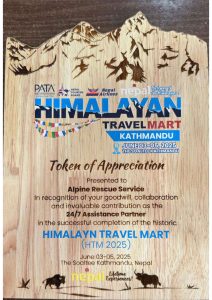
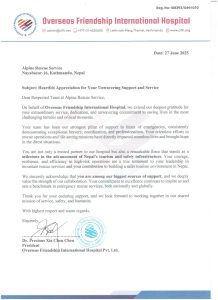
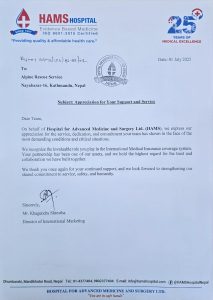
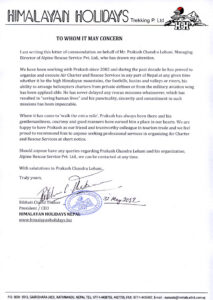
- Direct contractual partnership with Alpine Rescue, Nepal’s government-licensed heli operator
- Zero cash-on-arrival policies — all coverage confirmed before you depart
If a rescue operator in Nepal cannot show you a government registration number, a verifiable Alpine Rescue affiliation, and GPS-linked rescue logs, do not sign with them.
HGN Packages
Crucial Pricing Factors
1. Pricing Difference: With vs. Without Device
Himalayan Guardian is known for its GPS/BDS Satellite Tracer. You can choose to include this device for enhanced safety (real-time SOS tracking even without cellular signal).
- With GPS Tracer: These plans are slightly more expensive. The device is highly recommended for solo trekkers.
- Without GPS Tracer: A “Basic” version of the insurance is available at a lower cost, but it relies on traditional communication (phone/guide) for rescue activation rather
Summary of Benefits
- Direct Rescue Coordination: Unlike international insurance, Himalayan Guardian works directly with local Nepal rescue networks for faster helicopter dispatch.
- Government Authorized: It is the first device-supported system approved by the Nepal Insurance Authority and Nepal Telecommunications Authority.
- Transparency: Designed to prevent “fake rescue” billing by using GPS data to verify the location and necessity of the evacuation.
Disclaimer: Prices are subject to change by the provider. For an exact quote based on your specific dates and age, visit himalayanguardian.com/pricing.
Why Himalayan Guardian Nepal Is the Only Logical Choice in 2026
The data points in one direction.
Historical research established a trekker death rate of 15 per 100,000 trekking permits in Nepal, with a helicopter rescue frequency of 75 per 100,000 permits. Those numbers are from studies decades old. Today, with over 166,000 trekking permits issued in 2024 and routes more crowded than ever, the absolute number of emergencies is significantly higher — and the fraud environment surrounding rescue services has never been more dangerous.
Himalayan Guardian Nepal was built for exactly this moment. Real GPS hardware. Government-approved trekking insurance Nepal up to and above 6,000m on designated special routes. A direct Alpine Rescue Nepal integration that cuts response times to 30 minutes. Audit-proof rescue logs that eliminate the fraud risk exposed in the 2025–2026 scandal.
You have worked hard to get to Nepal. Your trek to Everest Base Camp, the Annapurna Circuit, or the Manaslu high passes deserves the safety infrastructure that matches the ambition of the journey.
Do not rely on a hotel recommendation made at 3am during a medical emergency. Register with Himalayan Guardian Nepal before you fly.
| → Get HGN trekking insurance Nepal now: https://www.himalayanguardian.com/contact |
Endorsed by Alpine Rescue Nepal — alpine-rescue.com